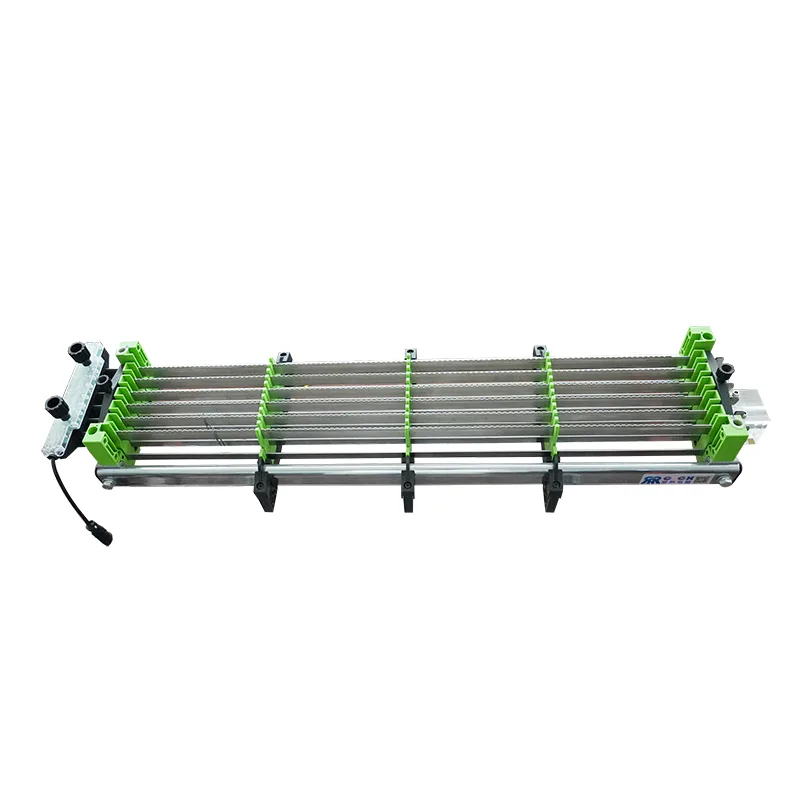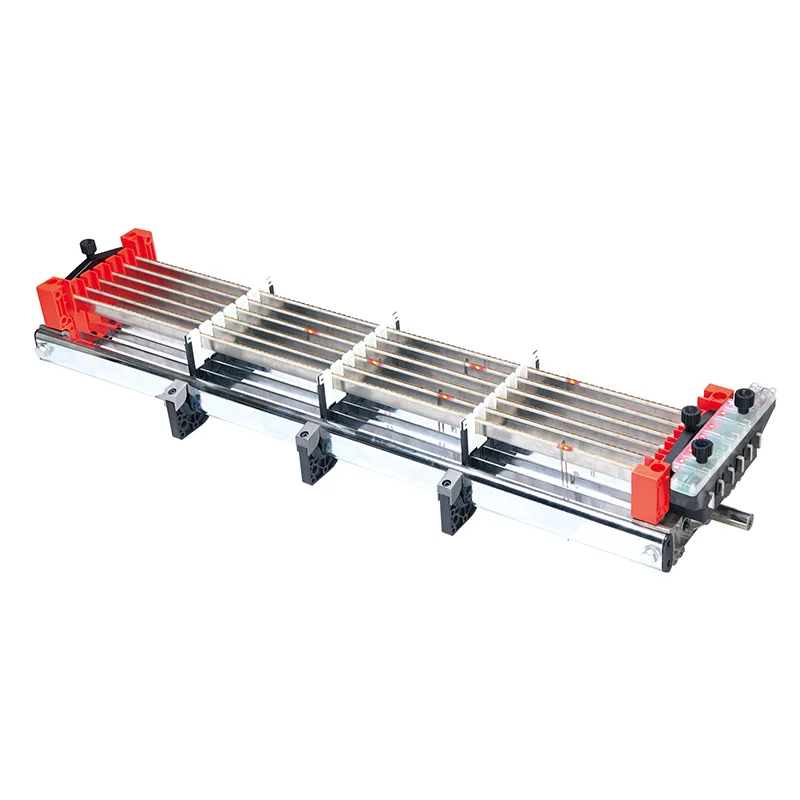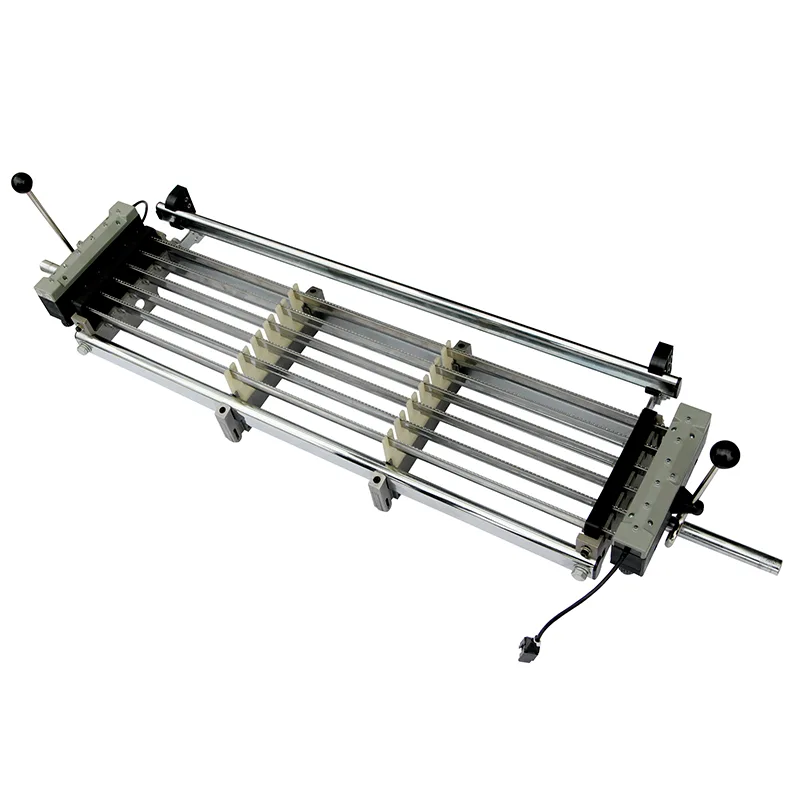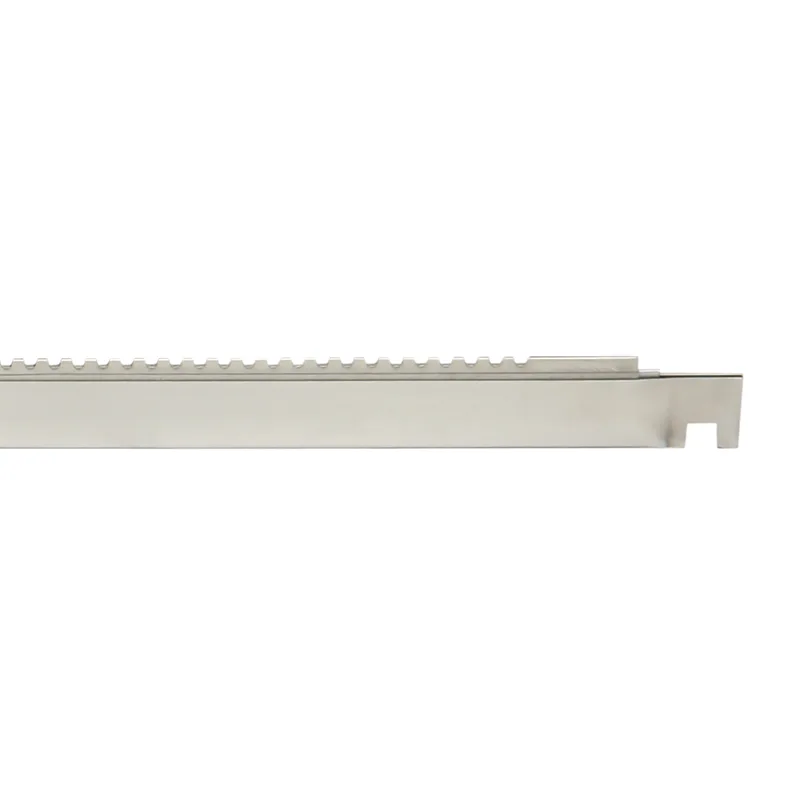
Industrial weaving equipment is only as reliable as its weakest component. In dobby and jacquard shedding systems, the shedding arm bears a level of mechanical stress that most machine parts never experience — millions of reciprocating cycles, sustained lateral loads, and constant exposure to fiber dust and lubricant residue. In that context, getting 6 to 8 years of uninterrupted service life out of a single component is not an accident. It is the direct result of deliberate engineering, premium material selection, and a production philosophy built around long-term industrial performance.
At Changshu Changxin Textile Equipment Co., Ltd., our engineering team has spent decades studying exactly what separates a shedding arm that fails at 18 months from one that still performs accurately at year seven. The answers consistently come back to the same five factors: alloy composition, surface hardness, dimensional precision, dynamic balance, and fatigue resistance under cyclic loading. This article breaks down each of those factors in depth, explains the specifications behind our products, and gives you the technical framework to evaluate any shedding arm purchase with confidence.
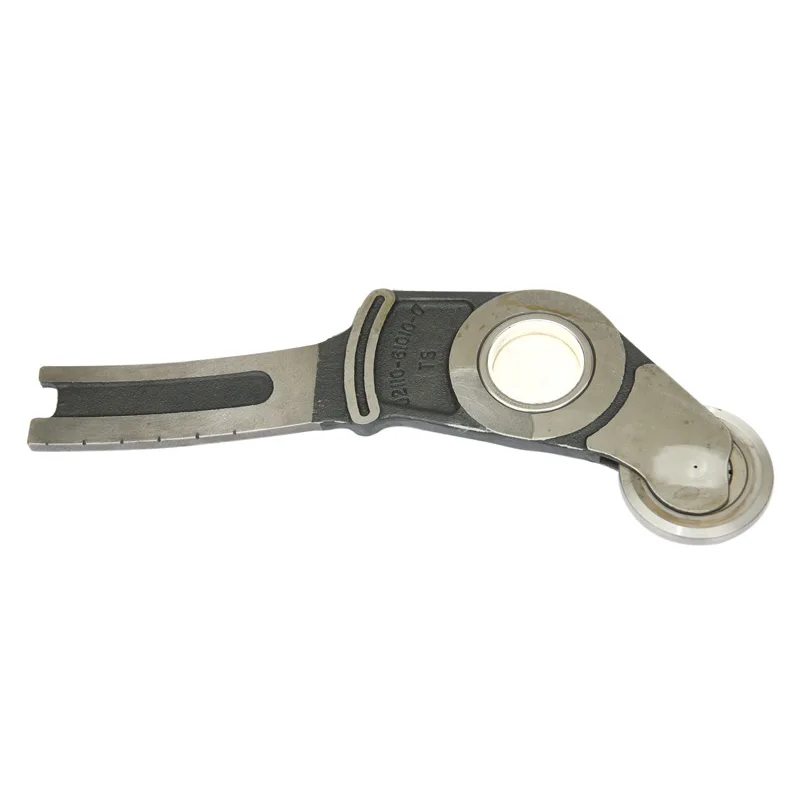
Material selection is the single most decisive factor in how long a shedding arm will perform under production conditions. A part that looks identical on the outside can behave entirely differently depending on the alloy used, the heat treatment applied, and the surface finishing method chosen. At Changshu Changxin Textile Equipment Co., Ltd., our material sourcing and testing protocols are built around one objective: producing components that maintain dimensional stability and surface integrity across hundreds of millions of cycles.
The shedding arm operates in a mechanically aggressive environment. Every cycle introduces bending stress, torsional load, and impact forces at the pivot joint. Over a standard production shift of 16 hours, a typical dobby loom will subject the shedding arm to between 800,000 and 1.2 million load cycles. Multiply that across a 300-day production year and you are looking at over 350 million cycles annually. Only materials engineered for high-cycle fatigue resistance can survive that workload without developing micro-cracks or dimensional drift.
Our shedding arms are produced using the following material specifications:
The result is a component with a hard, wear-resistant exterior and a tough, crack-resistant core. This dual-property structure is what allows our shedding arm to absorb thousands of impact cycles per hour without chipping or fracturing at stress concentration points.
| Base Material | High-strength alloy steel, grade 40CrMnMo or equivalent |
| Surface Hardness | HRC 58 - 62 (all contact and bearing surfaces) |
| Core Hardness | HRC 30 - 38 |
| Case Depth | 0.8 mm - 1.2 mm |
| Heat Treatment | Carburizing + quenching + low-temperature tempering |
| Surface Finish (Ra) | 0.4 to 0.8 micron on bearing and pivot interfaces |
| Anti-corrosion Coating | Phosphating + rust-inhibiting oil film |
Beyond the steel itself, the quality of the bronze or polymer bushings used at pivot joints plays a major role in longevity. Our factory uses self-lubricating composite bushings at high-load interfaces, significantly reducing the maintenance burden and preventing the metal-on-metal wear that destroys cheaper assemblies within the first two years of service.
Purchasing a shedding arm based on price alone is one of the most expensive decisions a mill manager can make. The real cost of a component is calculated over its entire service life, including unplanned downtime, replacement labor, and the quality defects generated during the period when a worn component is still running but no longer performing accurately. Understanding the technical specifications that correlate with long service life allows procurement teams to make decisions based on total cost of ownership rather than unit price.
Our engineering team at Changxin Textile publishes full technical data sheets for every shedding arm model we produce. The following specifications are the ones our customers consistently identify as most critical when evaluating component quality:
| Pivot Bore Tolerance | H6 class (ISO 286) |
| Length Tolerance | plus or minus 0.05 mm |
| Straightness | Max 0.02 mm per 100 mm |
| Static Load Capacity | 1,800 N at pivot point |
| Dynamic Fatigue Rating | 500 million cycles at 1,200 N |
| Charpy Impact Value | 45 J/cm2 minimum |
| Surface Roughness (pivot) | Ra 0.4 - 0.8 micron |
| Operating Temperature Range | -10 degrees C to +80 degrees C |
| Compatible Loom RPM | Up to 650 RPM continuous operation |
These numbers are not marketing targets. They represent measured performance values verified through third-party testing at our factory's ISO-certified quality laboratory. Every production batch undergoes sampling inspection against these parameters before shipment approval is granted.
Two shedding arms made from identical raw material can perform very differently in service if the manufacturing process that shaped them was inconsistent. Precision machining tolerances, heat treatment uniformity, grinding parameters, and final inspection protocols all leave permanent signatures in the finished part. Those signatures either support long service life or undermine it from the first day of installation.
Our production process at Changshu Changxin Textile Equipment Co., Ltd. follows a strict sequence designed to build quality into the component at every stage rather than attempting to inspect it in at the end. The key process steps and their quality implications are described below:
| Blank Type | Closed-die forging (not casting) |
| Rough Machining Stock | 0.5 - 0.8 mm on critical surfaces |
| Carburizing Temperature | 920 degrees C, controlled atmosphere |
| Quench Medium | Oil quench, agitated bath |
| Cryogenic Treatment | Minus 80 degrees C (selected models) |
| Final Bore Grinding Accuracy | Plus or minus 5 microns |
| Inspection Coverage | 100% of finished parts, 12 critical dimensions |
| Quality Certification | ISO 9001:2015 |
This level of process control is what separates a shedding arm that reaches 6 to 8 years of service from one that develops excessive play in the pivot joint after 18 months. Dimensional drift in a worn pivot translates directly into shed geometry errors, increased heald frame stress, and ultimately woven fabric defects that generate customer complaints long before the arm actually fails mechanically.
Understanding failure modes is as important as understanding what makes a good product. In our decades of working with textile mills across Asia, Europe, and South America, the patterns of premature shedding arm failure are remarkably consistent. Most failures fall into one of four categories: metallurgical shortcuts, geometric inaccuracy, incorrect installation, and inadequate lubrication management. Each of these failure modes is preventable.
The following breakdown identifies the root causes our technical service team encounters most frequently, along with the observable symptoms that indicate each failure mode is developing:
Our shedding arm designs incorporate features specifically developed to mitigate these failure modes. Self-lubricating bushings at the pivot, generous lubricant reservoirs at grease nipple locations, and enlarged bore chamfers that guide assembly without generating edge stress are all standard features on our components.
Even the highest-quality shedding arm will underperform its potential if the maintenance regime around it is poorly managed. Conversely, a well-executed preventive maintenance program can push service life well beyond the 6-to-8-year benchmark, reducing total component cost and improving loom availability simultaneously. Our factory provides every customer with a detailed maintenance guide tailored to their specific loom model and production environment.
The maintenance activities that have the greatest impact on service life are straightforward to implement and require no specialized equipment beyond what any well-equipped maintenance department already possesses.
| Lubrication Check | Every 250 hours |
| Full Relubrication | Every 500 hours (250 hours in harsh environments) |
| Grease Flush and Replace | Annually |
| Pivot Bore Clearance Check | Every 1,000 hours |
| Dye Penetrant Inspection | Every 2,000 hours (high-speed looms) |
| Shed Geometry Verification | Every 500 hours |
| Fastener Torque Check | Every 250 hours |
| Replacement Threshold (bore clearance) | 0.06 mm maximum clearance |
Mills that follow this maintenance schedule consistently report shedding arm service lives at the upper end of the 6-to-8-year range. Several of our long-term customers operating Changshu Changxin Textile Equipment Co., Ltd. components in well-maintained environments have documented service lives exceeding 9 years on high-quality loom models. The combination of our manufacturing quality and a disciplined maintenance program is what makes those results achievable.
A shedding arm that delivers 6 to 8 years of reliable service is not the product of chance. It is the outcome of a consistent, disciplined approach to material science, manufacturing precision, quality control, and field maintenance. Every element of our design and production process at Changshu Changxin Textile Equipment Co., Ltd. is oriented toward that service life target, because our customers measure us not by what our components cost to buy, but by what they cost to own over their full service life.
The key factors that determine whether a shedding arm reaches that benchmark are clear and measurable: alloy selection, case hardness and depth, dimensional accuracy, forged grain structure, fatigue resistance, and the quality of the maintenance program surrounding the component in service. Our products are engineered and manufactured to excel in every one of those dimensions, and our technical support team is available to help your maintenance staff optimize the operating environment for maximum component life.
If your current supplier cannot provide the material certifications, dimensional inspection records, and fatigue test data that back up the service life claims on their components, that is a meaningful signal. We provide all of that documentation as a standard part of every order we ship.
Contact our technical team at Changshu Changxin Textile Equipment Co., Ltd. today for a full product consultation. We will review your loom model, current component specifications, and maintenance environment to identify the shedding arm configuration that delivers the longest service life for your specific application.
Request a technical datasheet, a sample order, or a custom quotation directly from our factory. Our engineering staff responds to all technical inquiries within one business day, and we ship to over 40 countries with full export documentation.
Do not let underperforming components drive your maintenance costs up and your loom availability down. Reach out to us now and let our product quality speak for itself.
How do I know when a shedding arm has reached the end of its service life and needs to be replaced rather than serviced?
The most reliable indicator is pivot bore clearance measured with a calibrated gauge. When the clearance between the bore and its mating shaft exceeds 0.06mm, the component can no longer maintain the geometric accuracy required for consistent shed formation. At that point, continued operation will generate increasing heald frame stress and fabric defects that cannot be resolved by adjustment or relubrication. Additional replacement indicators include visible surface cracking on the arm body detected during dye penetrant inspection, fretting wear marks on the pivot shaft contact zone, or a measurable increase in shed geometry deviation beyond 2mm from the original commissioning reference. Any one of these conditions independently justifies replacement; the presence of two or more indicates the component is operating well past its optimal replacement point.
What is the difference in service life between a cast shedding arm and a forged one, and does the price difference justify the upgrade?
The service life difference between cast and forged shedding arms is substantial and well documented in the field. Cast components have a random, isotropic grain structure that provides approximately equal strength in all directions but lacks the directional fatigue resistance that forged components achieve through aligned grain flow. In high-cycle fatigue conditions — which is precisely the operating environment of a loom running 500 to 650 RPM for two or three shifts per day — forged arms consistently demonstrate 35% to 50% longer fatigue life before crack initiation. On a cost-of-ownership basis, the higher upfront cost of a forged shedding arm is typically recovered within the first 18 months of operation through reduced replacement frequency and lower downtime costs. Mills running three-shift operations typically find the payback period even shorter, making the forged option the lower-cost choice over any planning horizon beyond two years.
Can a shedding arm designed for one loom brand be adapted for use on a different manufacturer's machine, and what are the risks?
Cross-brand substitution of shedding arms is technically possible in some cases but carries significant risks that must be evaluated carefully before any such installation. The primary concern is dimensional compatibility at the pivot interface and the connecting pin geometry. Even small differences in bore diameter, pin hole spacing, or arm span length can produce misalignment that concentrates stress at unintended locations, dramatically shortening service life and potentially damaging the adjacent pivot block or heald frame. A secondary concern is load rating compatibility: different loom designs apply different dynamic forces to the shedding arm, and a component rated for a lower-speed machine may develop fatigue cracks much earlier when operated on a higher-speed platform. Our factory manufactures shedding arms to the specific dimensional standards of all major loom brands in current production, and our engineering team can review your loom's original specifications to confirm whether a given arm configuration is a genuine fit or a compromise that will shorten service life.
What lubricant type and application method produces the best results for shedding arm pivot joints in high-temperature weaving environments?
In weaving environments where ambient temperatures regularly exceed 30 degrees C, standard NLGI Grade 2 lithium grease can thin and migrate out of the bearing interface faster than the rated relubrication interval assumes. For these conditions, an NLGI Grade 2 lithium complex grease with a dropping point above 260 degrees C is the appropriate specification. Lithium complex greases retain their consistency and film strength at elevated temperatures significantly better than conventional lithium soap greases. Application method is also important: manual grease gun application to the nipple until fresh grease is visible at the relief point ensures the old, oxidized grease is fully displaced rather than simply diluted. Automated centralized lubrication systems can be calibrated to deliver the correct volume at the correct interval, and in high-production environments with three-shift operation they consistently outperform manual programs in maintaining adequate film thickness throughout the full operating cycle. Our factory can provide lubricant specification sheets on request.
How does the RPM rating of a loom affect the expected service life of a shedding arm, and should higher-speed machines use a different component specification?
Loom operating speed has a direct and nonlinear effect on shedding arm fatigue accumulation. At 400 RPM, a loom accumulates approximately 192 million cycles per year of three-shift operation. At 600 RPM, that number rises to 288 million cycles — a 50% increase in annual fatigue loading that can reduce component service life by 35% to 40% if the arm specification is not adjusted accordingly. For looms operating above 500 RPM, our factory recommends the upgraded specification that includes cryogenic treatment after quenching, a tighter bore tolerance class, and a surface roughness specification of Ra 0.4 micron rather than 0.8 micron at the pivot interface. The cryogenic treatment converts residual austenite to martensite, improving dimensional stability and raising the fatigue endurance limit of the surface. The tighter bore tolerance reduces the dynamic load concentration that occurs when clearance allows the shaft to make contact at a reduced arc rather than full circumferential contact. These upgrades are standard in our high-speed loom series and are available as a factory option on standard models when the customer's operating speed warrants them.